
Overview
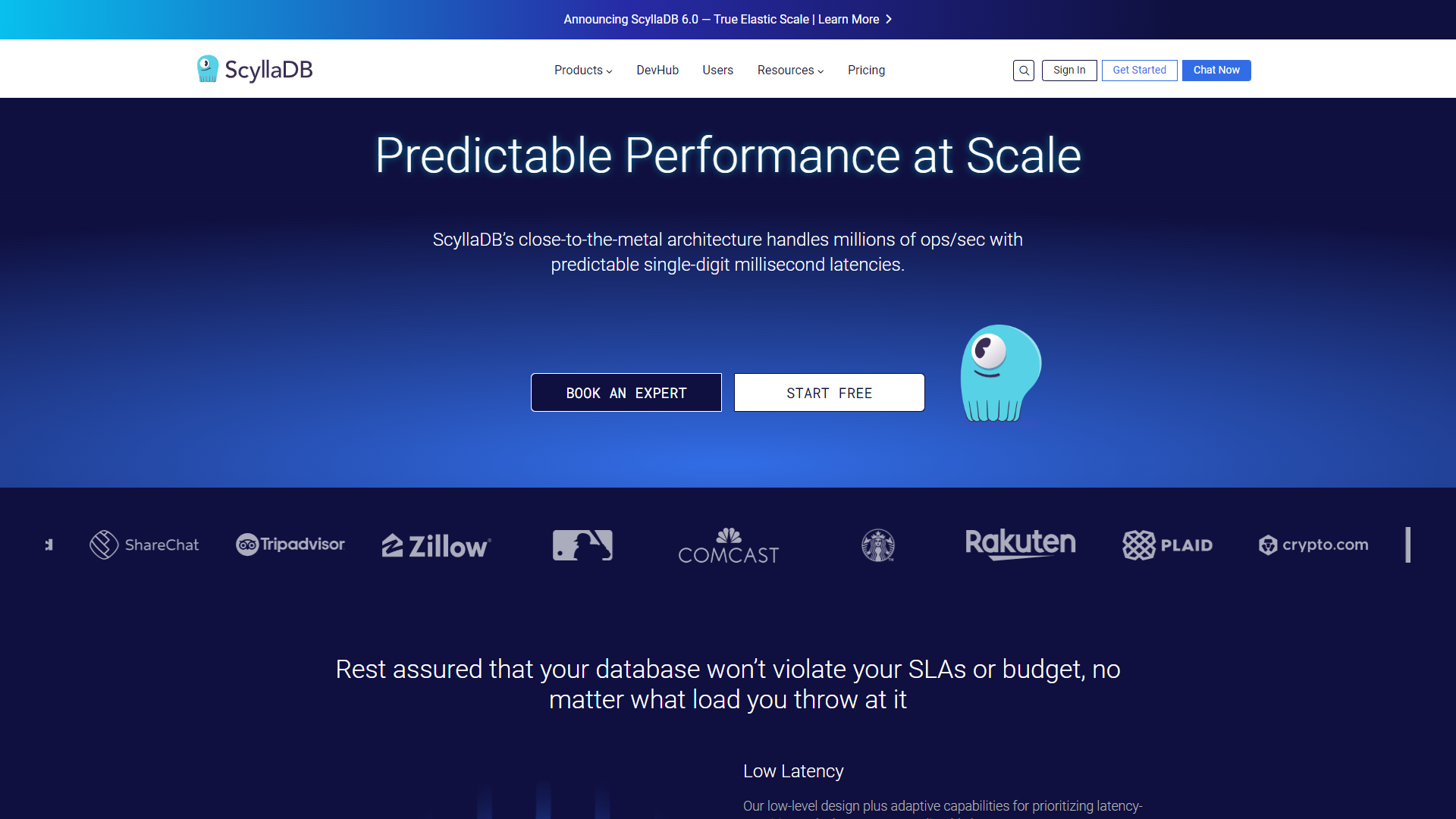
Scylla is a modern NoSQL database built to handle large amounts of data quickly and efficiently. It is known for its low-latency performance, making it suitable for real-time data processing. Scylla uses a unique architecture that takes advantage of multi-core processors and can scale horizontally, which means it can grow easily as your data needs increase.
One of the standout features of Scylla is its compatibility with Apache Cassandra. This means that users familiar with Cassandra can transition to Scylla with minimal effort while benefiting from enhanced performance. Additionally, Scylla supports various data models, allowing developers to choose the structure that best fits their needs.
In a world where speed and efficiency are crucial, Scylla stands out by providing a high-throughput solution. Whether you're working on big data applications or real-time analytics, Scylla offers the robustness needed to manage complex data workloads without sacrificing performance.
Pros
- Fast Performance
- Easy to Scale
- Cassandra Compatibility
- Active Development
- Robust Reliability
Cons
- Complex Setup
- Learning Curve
- Resource Intensive
- Limited Documentation
- Cost
Clone Scylla with AI
Create your own version of Scylla — no coding needed. AI builds it for you in minutes.
Key features
High Performance
Scylla is designed for low-latency and high-throughput operations, making it ideal for real-time applications.
Cassandra Compatibility
Scylla offers compatibility with Apache Cassandra, allowing for easier migration and usage.
Horizontal Scalability
The database can easily scale out by adding more nodes, which helps to accommodate growing data needs.
No Garbage Collection
Scylla avoids the traditional garbage collection issues seen in other databases, reducing latency.
Multi-Threaded Design
The architecture allows Scylla to efficiently use all CPU cores for faster performance.
Flexible Data Model
Scylla supports different data models, allowing customization based on application requirements.
Built-in Monitoring
Scylla includes tools for monitoring performance and health, helping users maintain optimal operations.
Strong Community Support
With a growing community, Scylla users can access a wealth of resources and shared knowledge.
Rating Distribution
User Reviews
View all reviews on G2GUN DETECTION FROM VIDEOSTREAM
What do you like best about Scylla?
Gun recognitinon videoanalytics made by SCYLLA has excellent performance. Provided system is able to detect guns with high reliability, very low false positive detections and in even in reflections at glass surfaces like shop windows. SCYLLA's gun recognition is v...
Company Information
Alternative Image Recognition tools
Explore other image recognition tools similar to Scylla




-logo.png)

FAQ
Here are some frequently asked questions about Scylla.
What is Scylla?
Scylla is a high-performance NoSQL database designed for fast data processing and scalability.
How does Scylla differ from Cassandra?
Scylla is compatible with Cassandra but offers better performance and scalability due to its modern architecture.
Is Scylla easy to scale?
Yes, Scylla can easily scale out by adding more nodes as your data needs grow.
Can I use Scylla for real-time analytics?
Absolutely! Scylla is designed for low-latency operations, making it perfect for real-time analytics.
How does Scylla handle performance monitoring?
Scylla includes built-in monitoring tools to help you track performance and maintain system health.
What types of data models does Scylla support?
Scylla supports various data models, allowing developers to choose the best fit for their applications.
Is there a community for Scylla users?
Yes, Scylla has an active community that provides resources, support, and shared knowledge.
What are the system requirements for Scylla?
Scylla requires a multi-core processor and sufficient RAM to achieve optimal performance.